

The checklist after selling a house includes organizing your closing documents, understanding capital gains taxes, transferring utilities, updating your address, and planning what to do with your sale proceeds. Missing these steps can lead to financial or legal issues after closing.
Why This Checklist Matters More Than Most Sellers Realize
Once your home sale closes, it feels like everything is finished.
But in a Washington real estate transaction, closing is simply the point where ownership transfers under the contract. It does not mean your responsibilities are over.
There are still financial, legal, and logistical steps that happen after closing—and missing them can create real problems.
Sellers who skip this phase often run into:
- Unexpected tax exposure
- Missed utility bills or collections
- Lost documentation during audits
- Delays when trying to buy their next home
This checklist after selling a house is what separates a clean exit from a messy one.
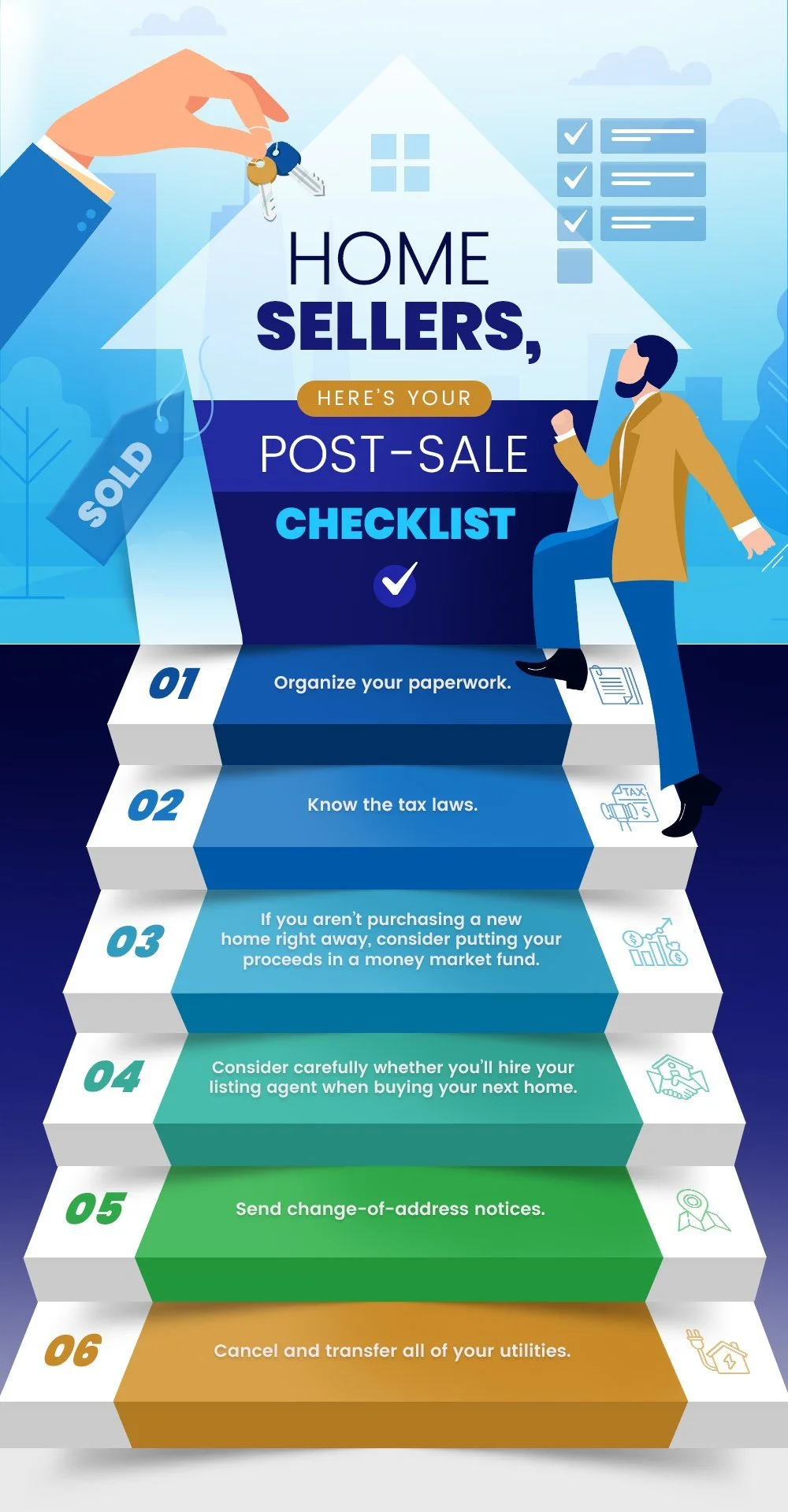
1. Organize your paperwork.
After closing, you will receive a full package of transaction documents. These are not just records—they are part of your financial history and may be required years later.
In a Washington transaction, your sale is governed by the purchase and sale agreement and multiple addenda. Every one of those documents ties into your final numbers.
You should keep:
- Final settlement statement (your closing breakdown)
- Seller disclosure statement
- Listing agreement
- Inspection responses and repair agreements
- Receipts for upgrades or repairs made before sale
These documents establish:
- Your adjusted cost basis for tax purposes
- Proof of expenses and improvements
- Legal history of the transaction
A common mistake is assuming you only need these for one tax season. In reality, you should keep them for at least seven years.
2. Know the tax laws.

One of the biggest misconceptions in Washington is that because there is no state income tax, there are no taxes on the sale of a home.
That is not the case.
You may still be subject to federal capital gains tax, depending on your situation.
Most sellers qualify for an exclusion:
- $250,000 if single
- $500,000 if married
To qualify, you must:
- Have lived in the home as your primary residence
- For at least two of the last five years
However, there are exceptions where taxes may still apply:
- Rental or investment properties
- Homes owned for a shorter period
- Gains exceeding the exclusion limits
This is why many sellers consult a CPA after closing to review their specific situation.
Understanding this step in the checklist after selling a house helps you avoid surprises when tax season comes.
3. If you aren’t purchasing a new home right away, consider putting your proceeds in a money market fund.

Once your sale closes, your proceeds are typically wired within one business day.
If you are not immediately buying another home, you need a short-term plan for that money.
The goal is simple:
- Keep your funds safe
- Keep them accessible
- Earn a modest return
Many sellers choose options like:
- Money market accounts
- High-yield savings accounts
- Short-term treasury-backed funds
The mistake to avoid is locking your money into long-term investments if you may need it soon for another purchase.
In competitive Washington markets, having quick access to your funds can make a difference when you write your next offer.
4. Consider carefully whether you’ll hire your listing agent when buying your next home.

It is natural to want to continue working with the agent who helped you sell your home.
But buying and selling are different processes, and they require different strategies.
In Washington, agency relationships are clearly defined and can change depending on the role your agent plays in the transaction. Representation on the listing side does not automatically translate to the best fit on the buying side.
You should consider:
- Are you staying in the same area or relocating?
- Are you buying a similar type of property or something different?
- Does your agent specialize in your next market?
If you are staying local and buying a similar home, your listing agent may be a great fit.
If you are moving to a new area or changing price points, it may be worth interviewing additional agents who specialize in that market.
5. Send change-of-address notices.

Changing your address is one of the most overlooked steps in the checklist after selling a house, but it has real financial consequences if missed.
You should update your address before or immediately after closing to ensure a smooth transition.
Start with:
- USPS mail forwarding
- IRS records
- Social Security Administration
- Banks and credit card companies
- Employer and payroll
- Insurance providers
- Subscription services
Failing to update your address can lead to:
- Missed bills and late fees
- Lost tax documents
- Identity and security issues
This step is simple, but it prevents a chain reaction of avoidable problems
6. Cancel and transfer all of your utilities.

This is one of the most common mistakes sellers make—and it can directly impact your closing.
The instinct is to turn off utilities as soon as you move out.
In Washington transactions, that can cause problems.
Buyers typically perform a final walkthrough shortly before closing. If utilities are off, they cannot verify that systems like plumbing, electrical, and heating are functioning properly.
This can delay closing or create last-minute disputes.
The correct approach is:
- Keep all utilities on through closing
- Transfer or cancel them the day after closing
In many cases, utilities are also accounted for during closing to ensure any outstanding balances are paid.
Handling this step correctly ensures a smooth handoff to the buyer and avoids unnecessary complications at the finish line.
What Most Sellers Get Wrong
The biggest mistake isn’t forgetting one item on the checklist.
It’s assuming the process is over.
In reality:
- Closing is just the legal transfer
- Financial and tax responsibilities continue
- Your next move depends on what you do after
This checklist after selling a house is what keeps everything from unraveling after the deal is done.
For a complete breakdown of what actually happens after closing in Washington, see:
What happens after closing washington sellers checklist
Or just browse our extensive FAQ.
Final Thoughts
Selling your home is a major milestone—but it is not the finish line.
In Washington, the transaction doesn’t truly wrap up the moment you sign closing documents. What you do immediately after closing is what determines whether the entire process ends cleanly or creates lingering issues.
The checklist after selling a house exists for a reason. Every step—paperwork, taxes, utilities, and financial planning—connects back to protecting your proceeds and avoiding problems that can surface weeks or even months later.
Most sellers don’t run into trouble because of one big mistake. It is usually a series of small oversights that compound over time.
If you stay organized, understand your tax position, and handle the transition properly, you put yourself in the best possible position for whatever comes next—whether that is buying another home, investing, or simply moving on with confidence.
For more step-by-step guidance on how real estate transactions work in Washington, visit:
FAQ
Share this post!
