
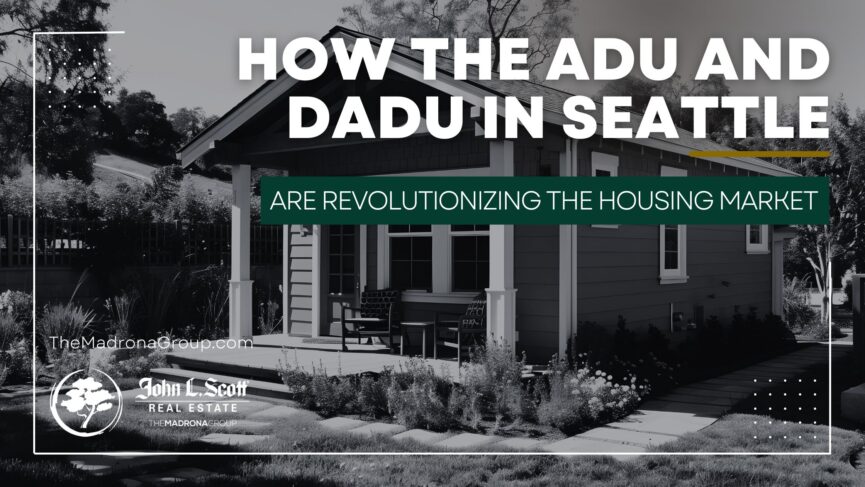
Accessory dwelling units and backyard cottages are becoming one of Seattle’s most practical answers to housing affordability, multigenerational living, rental income, and smarter use of existing residential land.
Seattle housing is expensive. That part is not breaking news.
For buyers, the challenge is finding a home that makes financial sense. For renters, the challenge is finding a place that is livable, well located, and not wildly out of budget. For homeowners, the challenge is figuring out how to make the most of the property they already own.
That is where ADUs and DADUs come in.
An ADU, or accessory dwelling unit, is a secondary living space located inside or attached to a primary home. A DADU, or detached accessory dwelling unit, is a separate living unit on the same property. In everyday language, people often call them basement apartments, mother-in-law units, garage apartments, backyard cottages, or guest houses.
In Seattle, these smaller housing options are no longer just a niche idea. They are part of the bigger conversation about affordability, density, aging in place, rental income, and how neighborhoods can evolve without losing their character.
Quick note: ADU and DADU rules are property-specific. Zoning, lot size, utilities, trees, environmentally critical areas, shoreline rules, design standards, and permitting requirements can all affect what is possible. Always verify your property with the City of Seattle, an experienced architect, a land use professional, or a qualified builder before making plans.
What Are ADUs and DADUs?
ADUs and DADUs are secondary housing units that share a property with a primary home. The big difference is whether the unit is inside or attached to the main house, or whether it is detached.
Attached ADU
An attached ADU is a separate living space located within or attached to the main home. Common examples include a basement apartment, a converted lower level, a finished garage space, or a separate suite inside the existing house.
Detached ADU
A detached ADU, often called a DADU, is a separate structure on the property. In Seattle, people often describe these as backyard cottages, detached guest houses, or small rental homes behind the main residence.
Both can create flexibility for homeowners. One family may use an ADU for rental income. Another may use it for aging parents. Another may use it for an adult child, a caregiver, a guest suite, or a future downsizing option.
Common Types of ADUs and DADUs in Seattle
Basement ADUs
A basement ADU can be one of the most practical options when the home already has usable lower-level space. The project may still require substantial work, especially for ceiling height, emergency escape, plumbing, electrical, heating, insulation, sound separation, and separate access.
Garage Conversions
A garage conversion can turn underused space into living space. This may work well when the garage structure is sound and the site layout supports a legal unit. Parking, utilities, building code, and access still need to be carefully reviewed.
Backyard Cottages
A backyard cottage is a detached structure built behind or near the primary home. This option often gives the most privacy, but it can also be more expensive because it may require new foundation work, utility connections, separate systems, and more site planning.
Above-Garage Units
An above-garage ADU or DADU can be a smart way to use vertical space. The existing garage may or may not be suitable for conversion, so structural review is critical before assuming the project is feasible.
Why ADUs and DADUs Are Popular in Seattle
Seattle has a simple problem with a complicated solution: many people want to live here, but housing is expensive and land is limited.
ADUs and DADUs do not solve the entire housing affordability issue by themselves. Let’s be honest. One backyard cottage is not going to fix Seattle’s housing market.
But across thousands of properties, they can help. They add housing without requiring large apartment buildings on every block. They allow homeowners to create more flexible living arrangements. They give renters more options. They can help families stay together while still giving everyone some space.
House Hacking With an ADU or DADU
One reason ADUs and DADUs get so much attention in Seattle is the potential for house hacking.
House hacking means using part of your property to generate income and help offset the cost of ownership. For example, a homeowner may live in the main house and rent out a basement ADU. Or they may live in the main house and rent a detached backyard cottage. Some owners eventually move into the smaller unit and rent the larger house.
That flexibility is powerful in an expensive housing market.
But the numbers need to be real. Rental income is not magic. You still have construction costs, financing costs, maintenance, insurance, taxes, vacancy risk, tenant laws, utility planning, and the reality of being a landlord.
Tell-it-like-it-is moment: An ADU can be a great wealth-building tool, but only if the math works. Do not build one because it sounds trendy. Build one because the property, budget, rent potential, timeline, and long-term plan make sense.
How Seattle and Washington Rules Have Changed
Seattle and Washington State have both moved toward making ADUs and DADUs more realistic for homeowners. The general direction has been to reduce barriers, increase housing options, and give property owners more flexibility.
That does not mean every property qualifies. It also does not mean every ADU project is simple. Permitting, design, utility work, lot constraints, trees, setbacks, height limits, stormwater, and environmental rules still matter.
Seattle’s official ADU guidance explains that accessory dwelling units must be established through a permit process and must comply with current Seattle residential, building, mechanical, electrical, energy, land use, environmentally critical areas, and shoreline code standards.
In plain English: the city may be more open to ADUs than it used to be, but you still need to build it correctly.
Benefits of Adding an ADU or DADU
Rental Income
A legal ADU or DADU may create rental income that helps offset the mortgage, property taxes, insurance, maintenance, or retirement costs. This is one of the biggest reasons homeowners explore the option.
Multigenerational Living
ADUs and DADUs can give aging parents, adult children, or extended family a nearby but separate place to live. This can be a major quality-of-life improvement for families who want proximity without giving up privacy.
Property Flexibility
A property with a legal second unit can adapt as life changes. Today it may be a rental. Tomorrow it may be a guest suite, caregiver space, home office, or future downsizing plan.
Buyer Appeal
Homes with legal, well-designed ADUs or DADUs can stand out to buyers who value income potential, flexible living space, or multigenerational options.
Costs and Financing Options
Building an ADU or DADU in Seattle is not cheap. Costs vary widely based on the property, the type of unit, design complexity, site conditions, utility requirements, finishes, permitting, and labor.
A basement conversion may cost much less than a new detached backyard cottage, but that is not always true. If the basement needs major structural, drainage, plumbing, ceiling height, or access improvements, costs can climb quickly.
Common Financing Options
- Home Equity Line of Credit: A HELOC may work for homeowners with enough equity and a manageable payment plan.
- Home Equity Loan: A fixed home equity loan may offer more predictable payments than a line of credit.
- Cash-Out Refinance: This may provide project funds, but it can be less attractive if current rates are higher than the owner’s existing mortgage rate.
- Construction Loan: Some owners use construction financing, especially for larger detached units.
- Cash or Hybrid Funding: Some projects use a mix of savings, equity, and short-term financing.
Important: Before starting, talk with a lender, tax professional, insurance provider, and qualified contractor. ADU financing affects more than construction. It can affect monthly cash flow, taxes, insurance, rental strategy, and resale planning.
Parking, Utilities, Trees, and Site Constraints
The exciting part of ADUs is imagining the finished space. The less glamorous part is figuring out whether the site actually works.
Before spending serious money on design, homeowners should look at the practical constraints that can make or break a project.
Parking
Parking rules have become less of a barrier in many situations, but homeowners should still consider the real-world parking impact. Even when parking is not required, it may still matter to tenants, neighbors, and future buyers.
Utilities
Water, sewer, electrical service, heating, cooling, internet, drainage, and garbage access all need to be planned. Utility upgrades can be a major cost driver.
Trees and Landscaping
Seattle’s tree rules and site conditions can affect where a DADU can be placed. Do not assume the open spot in the backyard is automatically buildable.
Environmentally Critical Areas
Steep slopes, wetlands, shoreline areas, drainage issues, and other environmental constraints may trigger additional review or limit what can be built.
Challenges Homeowners Should Expect
ADUs and DADUs can be fantastic, but they are not simple weekend projects.
Homeowners should expect decisions around design, budget, permitting, rental strategy, neighborhood impact, and long-term use. The project may also bring surprises once walls are opened, utilities are reviewed, or site conditions are fully understood.
- Permitting can take time. Even a good project needs proper documentation and review.
- Costs can rise. Site work, utility upgrades, and code requirements can add expense.
- Rental rules matter. If you plan to rent the unit, landlord-tenant laws, registration, insurance, and lease terms all matter.
- Neighbors may have concerns. Density, parking, privacy, construction noise, and design can all come up.
- Resale value depends on quality. A legal, well-designed unit is very different from a cheap, awkward conversion.
Steps to Building an ADU or DADU in Seattle
If you are thinking about adding an ADU or DADU, do not start by calling three random contractors and asking for a ballpark price. Start with feasibility.
-
Research your property.
Review zoning, lot size, existing structures, utilities, trees, environmentally critical areas, and access. -
Clarify your goal.
Are you building for rental income, family, resale, aging in place, or future flexibility? The goal affects the design. -
Talk with experienced professionals.
Speak with an architect, designer, builder, land use consultant, lender, insurance provider, and tax professional as needed. -
Create a realistic budget.
Include design, permits, construction, utilities, site work, contingency, financing costs, furnishings, and potential vacancy. -
Choose a design path.
Some homeowners use custom plans. Others explore Seattle’s pre-approved DADU plan options to simplify part of the process. -
Submit permits and respond to review comments.
The city may request corrections or additional information before approval. -
Build, inspect, and document everything.
Keep records of permits, inspections, plans, warranties, and contractor information. Future buyers will care.
Seattle’s Pre-Approved DADU Plans
One helpful Seattle resource is the city’s pre-approved DADU plan program, often connected with the ADUniverse resource. These plans were created by local designers and architects to make the process more predictable for homeowners exploring detached backyard cottages.
Pre-approved does not mean automatic approval for every property. Your site still matters. Utilities still matter. Setbacks, trees, access, and other property-specific issues still matter.
But for the right property, pre-approved plans may help reduce design uncertainty and make the permitting path clearer.
What ADUs and DADUs Mean for Seattle Real Estate
For Seattle real estate, ADUs and DADUs change the way buyers and sellers look at property.
A buyer may look at a home differently if there is room for future rental income. A seller may attract more attention if the property already has a legal ADU or DADU. An investor may see value in flexible living arrangements. A multigenerational family may see a way to stay close without sharing the same kitchen.
In other words, ADU potential can become part of the property’s story.
That does not mean every property with a big backyard is suddenly worth a fortune. Buyers are smarter than that. They want to know what is legal, what is feasible, what has already been permitted, and what the real costs might be.
For sellers, the key is accuracy. Do not oversell “DADU potential” unless there is real evidence. A good listing should distinguish between a permitted unit, an existing nonconforming space, a possible future build, and a fantasy backyard sketch that has never been reviewed.
Questions to Ask Before You Build
- Is an ADU or DADU allowed on this specific property?
- Would an attached or detached unit make more sense?
- What are the likely construction and utility costs?
- Will the unit be used for rental income, family, guests, or future downsizing?
- How will the project affect parking, privacy, outdoor space, and neighbors?
- What rent is realistic for this location and unit type?
- How will the project affect insurance and property taxes?
- Will the finished unit be attractive to future buyers?
- Who will manage the rental if it becomes an income property?
- What is the backup plan if costs come in higher than expected?
Final Thoughts on ADUs and DADUs in Seattle
ADUs and DADUs are not a magic fix for Seattle’s housing market. But they are one of the most practical tools homeowners have for creating more housing, more flexibility, and potentially more income from property they already own.
For some homeowners, an ADU becomes a rental income strategy. For others, it becomes a place for parents, adult children, guests, or caregivers. For some, it becomes a future downsizing plan. For buyers, it can make a property more versatile. For sellers, it can make a home stand out if the unit is legal, useful, and well-designed.
The big takeaway is simple: ADUs and DADUs are changing how people think about Seattle homes.
Instead of looking at a house as one fixed thing, homeowners are starting to look at the entire property as a flexible asset. In a city where housing costs are high and land is limited, that is a big deal.
If you are considering buying, selling, or improving a Seattle property with ADU or DADU potential, start with good information. Research the property, verify the rules, talk to qualified professionals, and make sure the numbers work before you move forward.
Disclaimer: This article is for general educational purposes only. I am not an attorney, financial advisor, architect, contractor, tax advisor, or city planner. ADU and DADU rules, costs, rental laws, tax impacts, and permitting requirements can change and may vary by property. For legal, zoning, design, construction, tax, or financial advice, consult the appropriate licensed professional and confirm current requirements with the City of Seattle.
Helpful ADU and Seattle Real Estate Resources
Want to keep researching ADUs, DADUs, and Seattle housing options? These resources are a good place to start.
Share this post!
